10 minutes read
Moving to Digital Price Tags for Better Accuracy and Stronger Customer Trust

Michael Brennecke
Client Success Manager

Digital price tags, also known as electronic shelf labels (ESLs), are becoming an increasingly common sight in modern stores, including appliance retailers. They replace paper labels with electronic displays that can be updated automatically. This technology helps simplify day-to-day price management and reduce repetitive manual work. It also helps retailers update prices faster, maintain accuracy, minimize human error, and keep pricing consistent across the sales floor.
However, some shoppers are concerned that digital price tags could make it easier for retailers to change prices too frequently or without clear justification. Those concerns highlight an important point: digital price tags alone don't build customer trust the way retailers do.
The real value of digital price tags comes from using them responsibly. Clear and consistent pricing practices help retailers improve operational efficiency while building customer trust, making the transition from paper price tags to digital a positive experience for both businesses and shoppers.
Why More Retailers Are Leaving Paper Price Tags
Changing a single paper price tag isn't difficult, but changing hundreds of them across an entire showroom is a different story.
Imagine one of your manufacturers announces a weekend promotion across its Bosch French-door refrigerator lineup or updates the MSRPs for dozens of kitchen appliances. Someone now has to print new price tags, walk the sales floor, replace every outdated label, and double-check that each product displays the correct price. If one tag is missed, customers may see one price on the shelf and another at checkout.
Paper price tags also leave plenty of room for small mistakes that create bigger problems. An incorrect price, a tag placed on the wrong model, or an outdated promotional label left on display can confuse customers. Those mistakes create unnecessary questions during the sales process and require employees to spend even more time correcting them.
The challenge becomes even greater for retailers managing multiple locations or larger product catalogs. Every manufacturer price update, seasonal promotion, or clearance event creates another round of repetitive manual work. Hours that could be spent helping customers or closing sales are instead spent printing labels, replacing outdated tags, and verifying prices across the showroom.
Paper price tags may still work for smaller stores with infrequent price changes. The more products, promotions, and store locations a retailer manages, the harder it becomes to keep pricing accurate and consistent. That's one of the reasons many appliance retailers are moving to digital price tags.
Digital Price Tags Do More Than Save Time
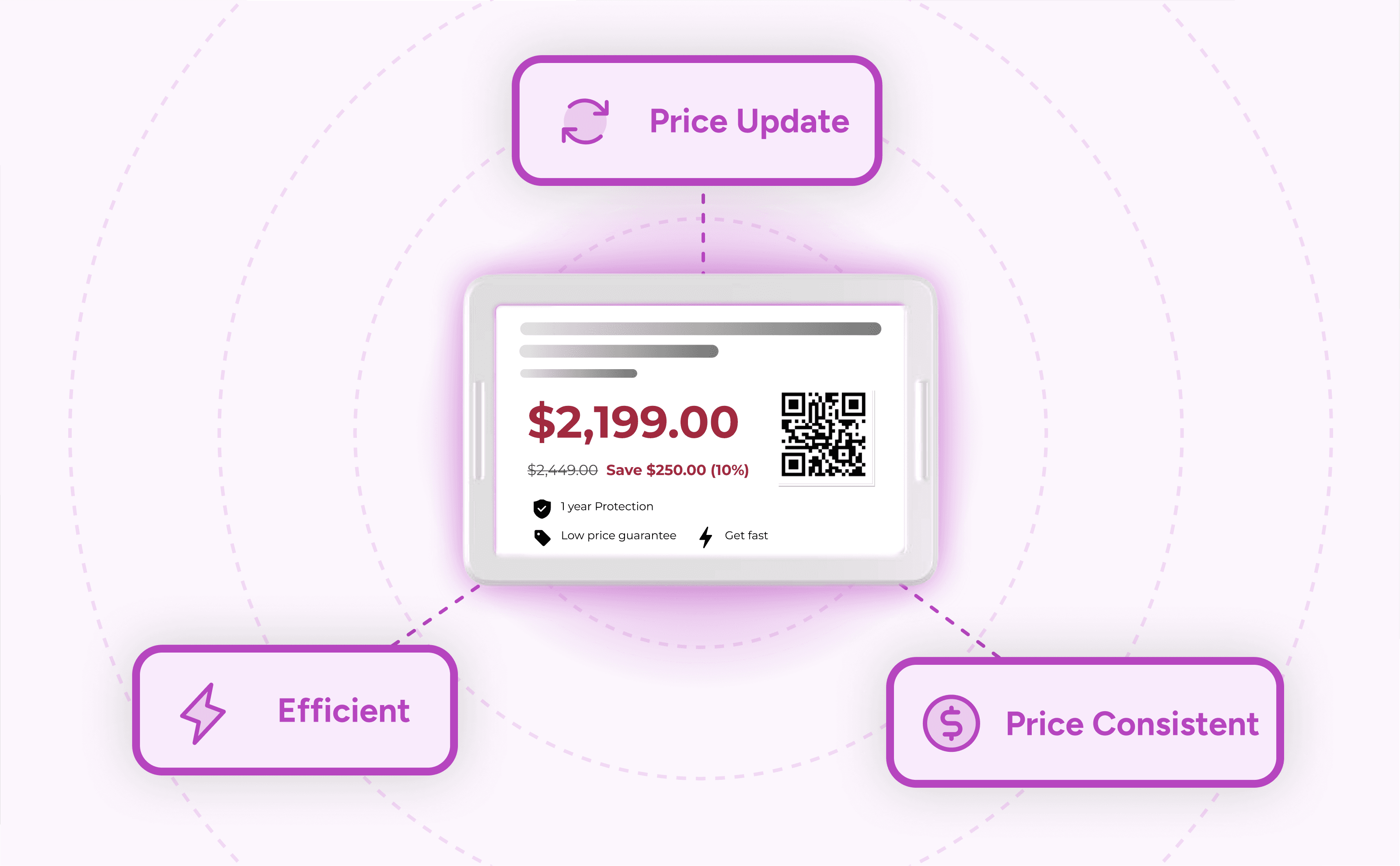
For many appliance retailers, the biggest benefit isn't replacing paper labels but simplifying daily pricing management. Manufacturer promotions, Minimum Advertised Price (MAP) updates, product launches, and seasonal sales happen throughout the year. Digital price tags make it easier to keep the showroom up to date without constantly printing, replacing, and checking paper labels.
Faster Price Updates
Appliance prices can change with little notice. Updating paper price tags for dozens or even hundreds of products often means updating shelf labels and walking the showroom to replace each one manually. Digital price tags simplify the process by allowing retailers to update pricing across an entire product category, brand, or showroom from a centralized platform.
Pricing Accuracy and Consistency
Pricing mistakes are easy to make when every paper label has to be updated manually. A tag may display an outdated promotion, be placed on the wrong appliance, or simply be overlooked during a manufacturer price update. These small mistakes can create confusion when the price on the shelf doesn't match the price at checkout or on your website.
Digital price tags help reduce those inconsistencies by keeping pricing synchronized with connected retail systems. Instead of manually replacing every label, retailers can update pricing more accurately while keeping prices consistent across the showroom, checkout, and online store. Customers see the same pricing wherever they shop, creating a smoother buying experience and greater confidence in every purchase.
Greater Flexibility for Promotions
Holiday events, clearance campaigns, manufacturer rebates, and limited-time promotions often require prices to change across dozens or even hundreds of products. Updating paper price tags can delay those campaigns, especially when every label has to be replaced and verified manually.
Digital price tags make it easier to launch promotions on time and keep showroom pricing aligned with the marketing team’s efforts. Whether retailers are promoting a specific brand, product category, or seasonal event, price updates can be applied much faster. As a result, every campaign launches with accurate pricing across the showroom.
Rich Product Details at the Shelf
Digital price tags can display much more than a product's price. Depending on the solution, they can also include a QR code that links shoppers to the product details page, where they can view more information about the appliance before making a purchase. Giving shoppers quick access to product information creates a more informed buying experience. It also reduces the number of basic product questions employees need to answer.
Sustainability and Brand Perception
Sustainability may not be a deciding factor for every retailer, but it's becoming increasingly important to many consumers. Digital price tags reduce the need for paper labels and plastic holders while supporting more sustainable business practices. They also create a cleaner, more modern showroom that can strengthen customers' perception of your brand.
Using Digital Price Tags to Build Customer Trust
Not everyone views digital price tags positively. One of the biggest concerns is how easily prices can be updated. While retailers can change prices instantly, that doesn't mean they should change them whenever they want.
The technology itself isn't the problem. Customer confidence has always depended on responsible pricing. Retailers are responsible for fair pricing, clear promotion communication, and ensuring the price displayed is the price customers actually pay. Digital price tags don't change those principles. They simply make it easier to maintain accurate and consistent pricing.
That commitment is especially important in appliance retail, where customers are making significant purchases. Shoppers expect the price on the showroom floor to match the price at checkout, on the retailer's website, and in advertised promotions. When every touchpoint presents the same information, customers can focus on choosing the right appliance instead of questioning the price.
Moreover, instant price updates don't mean prices should change without context. Imagine a customer comparing two refrigerators when the shelf price suddenly increases. Even if the change is legitimate, the experience can feel confusing or unfair if there's no clear explanation.
That's why every price change should have a clear business reason. Scheduled promotions, manufacturer rebates, or the start and end of advertised sales are all valid examples. However, unexpected price changes that happen without context can quickly undermine customer confidence.
When used responsibly, digital price tags help retailers deliver a more transparent shopping experience. They make it easier to keep promotions accurate, maintain consistent pricing, and give customers confidence that the price they see is the price they'll pay.
Connect Your Digital Price Tags with Appliance.io
Managing digital price tags becomes even more efficient when they're connected to the rest of your retail operations. Appliance.io integrates with supported digital price tag solutions, helping retailers synchronize pricing updates across point of sale (POS), inventory, and other connected systems. That means fewer manual updates, more accurate pricing, and greater consistency across the showroom.
Whether you're replacing paper labels or expanding your retail technology, Appliance.io helps simplify day-to-day price management while supporting a better customer experience. Beyond digital price tag integration, Appliance.io offers a connected retail platform that simplifies inventory management, pricing, sales, delivery, and other everyday operations. Contact the team to learn how the platform can support your business.