7 minutes read
Why Product Returns Require More Than Just Processing Refunds

Michael Brennecke
Client Success Manager
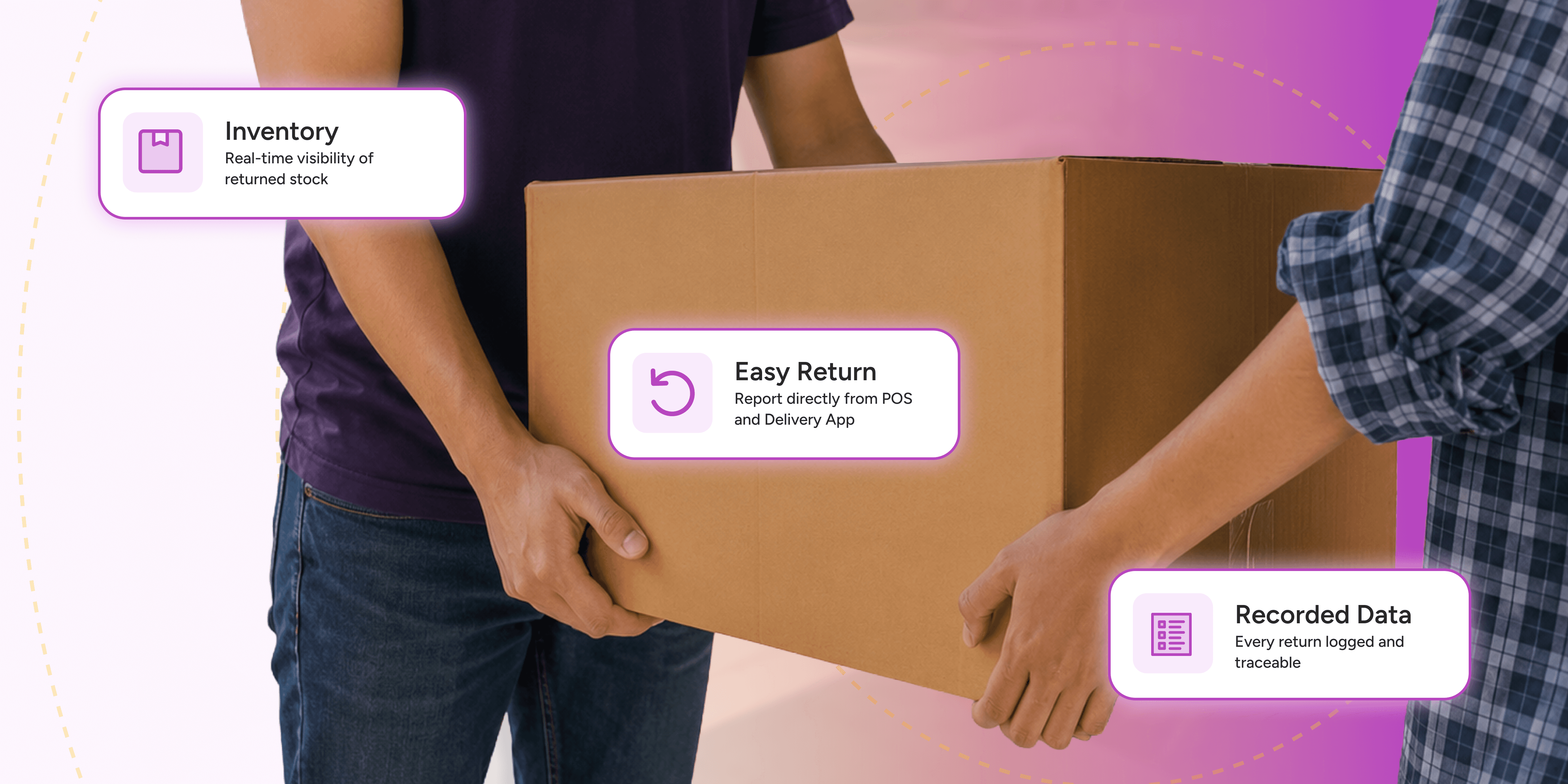
When customers return a product, the process often involves more than simply issuing a refund. Behind every return, multiple teams may need to coordinate information, update records, and take action to handle returns efficiently.
Without a connected process, returns management can quickly become time-consuming. Staff may need to communicate across departments to confirm return details, update inventory records, track refund activity, and keep management informed.
Imagine a customer returns an appliance and the refund is processed successfully, but there’s no refund information in the financial records. The finance team may see money leaving the business without clear documentation, creating confusion and increasing the risk of reporting discrepancies.
Similarly, the sales team may record a returned product but not communicate it to the warehouse right away. As a result, inventory records may not accurately reflect the product's status, making it more difficult for teams to maintain accurate stock levels and visibility.
As return volumes grow, these manual processes can create unnecessary administrative work and make it harder for teams to maintain visibility across the business.
That's why effective product return management requires more than refund processing. It requires a streamlined workflow that keeps sales, inventory, delivery, and management teams aligned throughout the entire return process.
Managing Product Returns Across Every Stage of the Process
An effective return process should allow businesses to handle returns consistently, regardless of where they originate. Whether a customer requests a return in-store, on the phone, by email, or even during delivery, teams need a way to capture accurate information and keep the process moving without unnecessary delays.
By connecting return activities to existing order records, businesses can manage returns more efficiently while maintaining visibility into each step of the process.
A connected returns management platform keeps return-related information in one place, allowing teams to access return records, refund information, inventory updates, and reporting data from a single system.
Process Returns Directly from POS
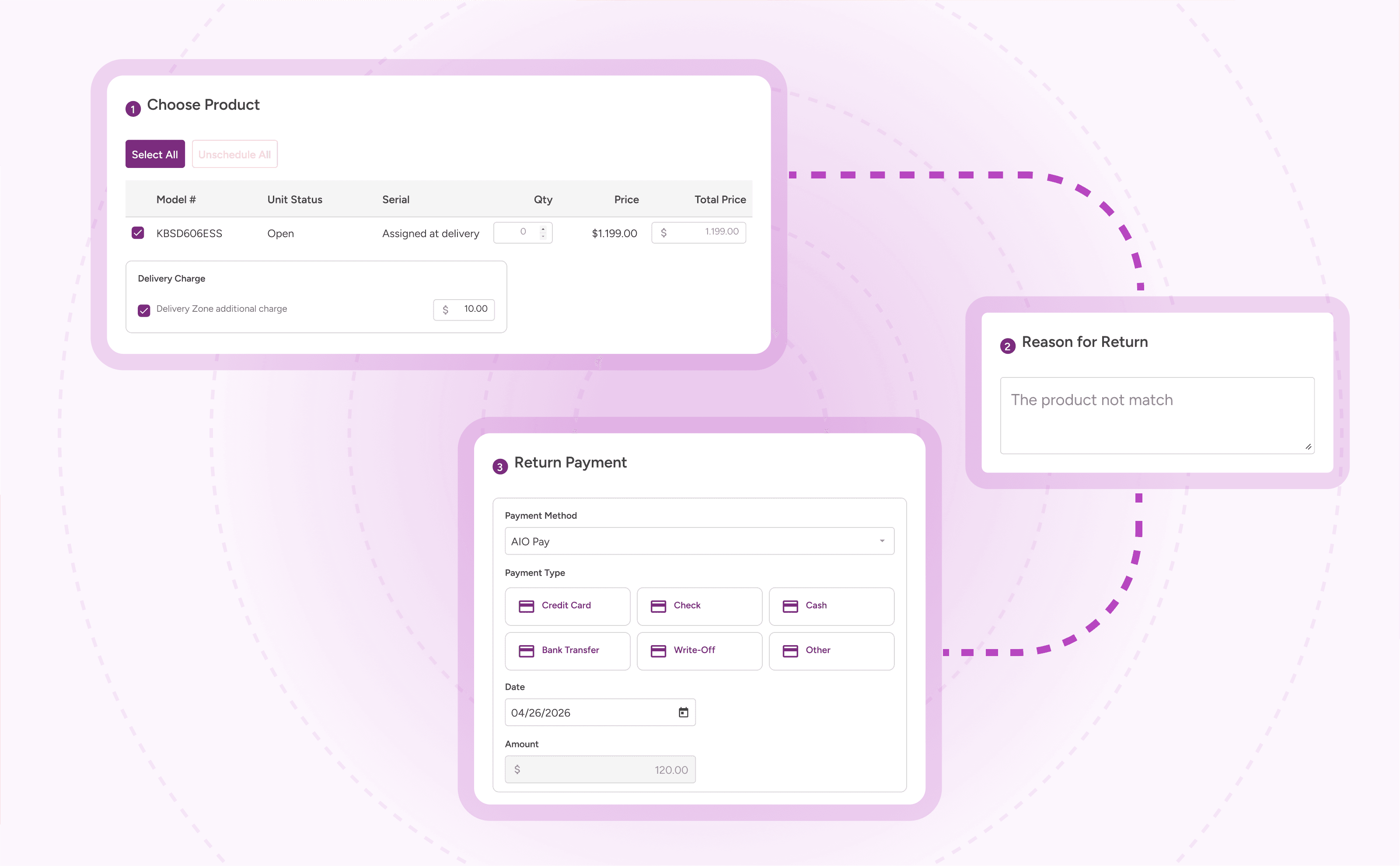
When customers request a return after a purchase, sales teams need a fast and reliable way to process the request. Processing returns directly from the original order helps teams work more efficiently while maintaining accurate customer and transaction records.
Learn more about Point of Sale (POS).
Handle Returns During Delivery
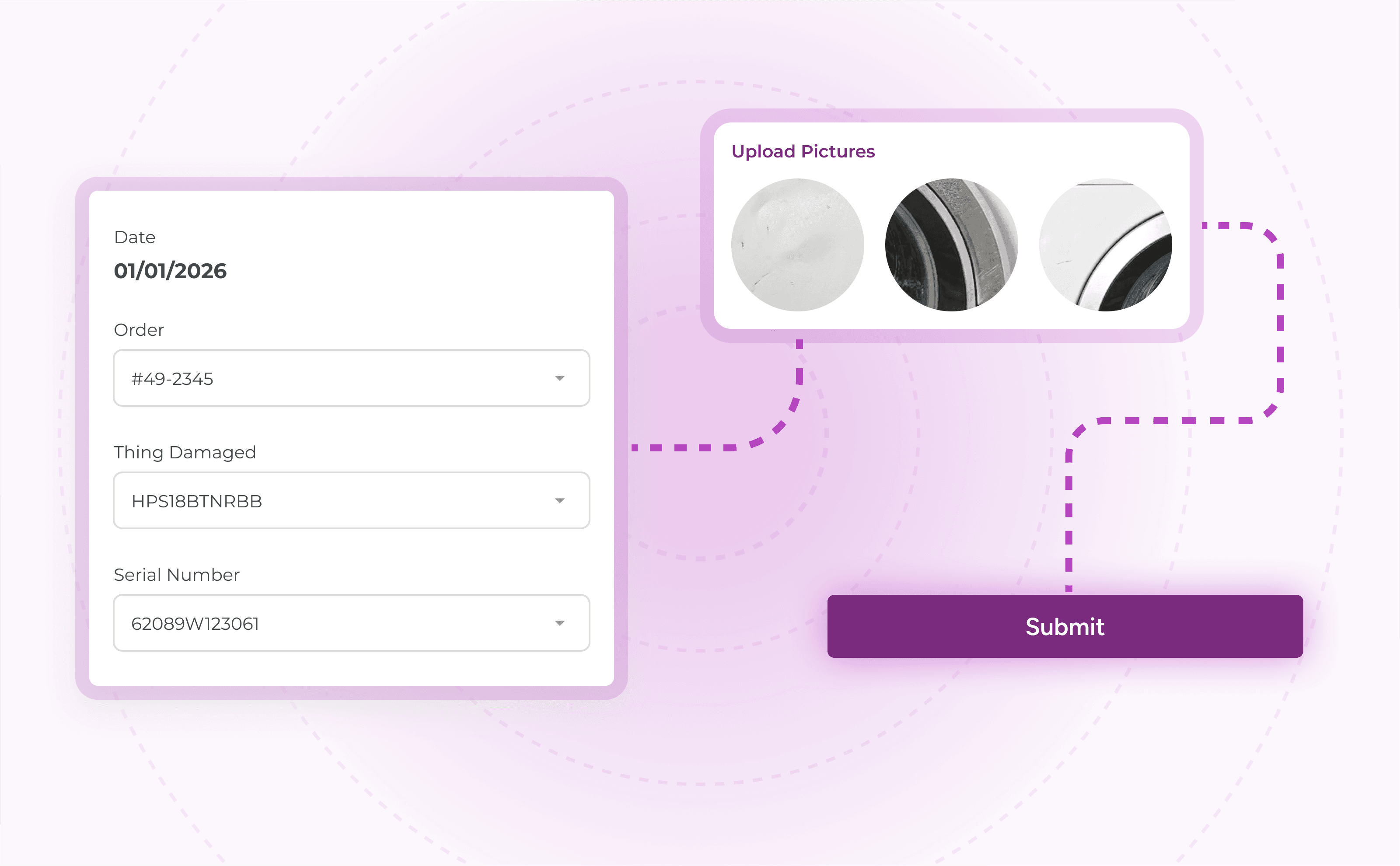
The truth is, not all return requests happen in-store, on the phone, or by email. In some cases, customers may identify an issue when the product arrives at their home. It could be due to damage, an incorrect model, the wrong color, or another delivery-related concern.
A driver app allows return information to be captured immediately at the delivery location, helping teams respond more quickly while keeping return records connected to the original order.
Explore the Driver App.
Keep Inventory Records Accurate
Every return affects inventory. Once a returned product is received, inventory records need to reflect the item's updated status so teams can maintain accurate stock visibility.
When returns and inventory records are connected, businesses can reduce discrepancies while keeping teams informed about product availability and warehouse operations. This helps ensure that returned items are properly accounted for and prevents inventory data from becoming outdated or incomplete.
Discover how Inventory supports return management.
Gain Better Visibility with Returns Reporting
Managing returns is not only about processing requests. Businesses also need visibility into return activity to understand which products customers return, the reasons behind those returns, and how return activity impacts overall operations.
A centralized returns report gives teams visibility into returned products, refund information, and return activity from one location. With this information in one place, teams can monitor return activity without relying on updates from multiple departments.
To help teams find information quickly, the report includes filtering options such as model number, return date, refund payment method, brand, location, and source. Businesses can also export return data in PDF, Excel, or CSV format for further analysis and reporting.
Learn more about Real-time Reporting.
The Value of a Connected Return Process
Product returns are a natural part of doing business, but managing them effectively requires more than simply processing refunds.
Every return can impact multiple areas of the organization, from sales and inventory to delivery operations, financial records, and reporting.
When return information is disconnected, teams often spend valuable time communicating across departments, manually updating records, and searching for the information they need. As return volume increases, these challenges can become more difficult to manage.
By connecting return activities, businesses can keep every team aligned throughout the return process. Appliance.io helps appliance retailers bring returns, inventory, reporting, and delivery workflows together in one platform, making it easier to reduce manual work and deliver a better customer experience.
Ready to simplify your product return process? Book a demo to see how Appliance.io helps appliance retailers connect returns, inventory, reporting, and delivery workflows in one platform.